RahaFlow – Integrated Operations, Inventory, Repair, and Commerce Platform
A unified business platform that helps companies manage products, warehouses, customers, repairs, orders, invoices, supplier operations, ecommerce, and operational visibility in one connected environment.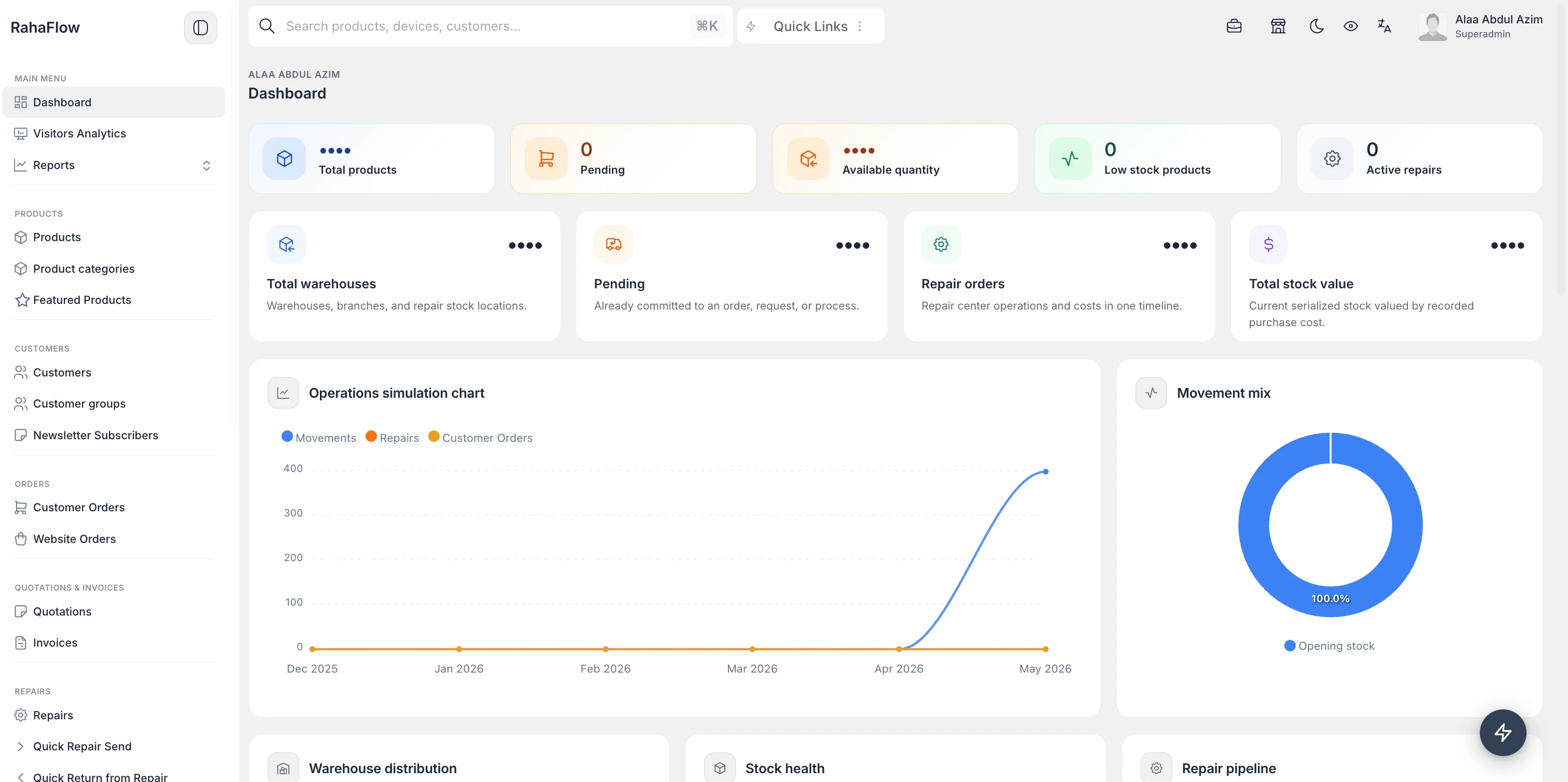
RahaFlow – A Complete Platform for Operations, Inventory, Repairs, and Sales
RahaFlow is an integrated business operations platform built for companies that sell, distribute, maintain, and manage technical products. Instead of relying on multiple disconnected tools, RahaFlow brings products, warehouses, customers, repairs, quotations, invoices, supplier operations, ecommerce, and internal follow-up into one organized environment. It helps teams operate with more clarity, stronger control, and better coordination across the full product lifecycle.Unique Value Proposition
- One connected system: inventory, warehousing, repairs, customer operations, sales, and online commerce are managed in one platform instead of scattered tools.
- Built for technical product businesses: ideal for electronics, devices, accessories, and product-based operations that require stock accuracy and service follow-up.
- Operational visibility: product movement, customer activity, repair progress, and stock changes become easier to follow across departments and locations.
- Sales and after-sales together: RahaFlow supports both product selling and service follow-up, giving businesses better control before and after the transaction.
- Internal and external experience: it serves internal teams while also powering a customer-facing buying journey within the same ecosystem.
- Scalable structure: suitable for companies growing from a single warehouse or branch into broader, more structured operations.
Core Modules
- Product Management: organize products with detailed information, categories, pricing, availability, and presentation across operational and customer-facing channels.
- Warehouse Management: control multiple warehouses, track stock levels, and maintain clearer visibility across locations.
- Stock Movements: follow product movement history including adjustments, transfers, outgoing, incoming, and operational changes.
- Inventory Audits: run structured warehouse audits, compare actual counts against expected stock, and identify discrepancies faster.
- Repair Operations: manage repair requests, repair centers, service reasons, statuses, cost follow-up, and delayed service visibility.
- Customer Management: organize customers, customer groups, and relationship flows with more control over service and pricing logic.
- Supplier Operations: follow suppliers, related invoices, obligations, and purchase-side activity more clearly.
- Sales Documents: prepare quotations, issue invoices, track payments, and keep visibility over commercial transactions.
- Ecommerce Experience: present products online, support product discovery, cart and order flows, and connect the customer journey to internal operations.
- Analytics & Reporting: monitor business activity, product movement, customer behavior, and operational performance from one place.
Business Logic & Workflow Value
- Product continuity: a product can move through stock, transfers, sales, service, and follow-up without losing operational context.
- Multi-location control: warehouse activity is structured to support real multi-branch or multi-storage businesses.
- Service traceability: repairs can be followed by status, center, timing, and cost to reduce confusion and improve follow-up quality.
- Customer segmentation: customer groups support more structured commercial logic and more flexible sales handling.
- Commercial follow-through: quotation, order, invoice, and payment-related activity can be managed as part of one connected business flow.
- Operational accountability: movement history and structured workflows improve visibility, discipline, and internal control.
User Flows
- Operations Team: receive and organize products, monitor warehouses, follow stock movement, and maintain a clearer overview of inventory status.
- Sales Team: manage customers, prepare quotations, issue invoices, follow payments, and connect selling activity with real product availability.
- Service Team: create repair orders, follow repair centers, track statuses, and manage product return visibility.
- Management: review reports, monitor operational performance, understand product flow, and make decisions from one unified view.
- Customers: browse products, place orders, follow purchases, and benefit from a more connected buying experience.
Warehouse & Product Experience
- View warehouse-level performance, stock quantities, and low-availability products more clearly.
- Track the lifecycle of products from entry to movement, transfer, sale, or service.
- Improve stock discipline by giving teams clearer movement history and stronger follow-up visibility.
- Support product presentation with detailed organization that works for both internal operations and online display.
Repairs & After-Sales Operations
- Follow repair orders from the moment a product is sent for service until it is completed or returned.
- Manage repair centers and service reasons in a structured way that supports repeatable workflows.
- Monitor repair costs and outstanding service-related obligations with better visibility.
- Reduce after-sales confusion by keeping product, service, customer, and timing context connected.
Sales, Orders, and Customer Experience
- Serve different sales journeys, from direct online buying to more structured customer relationship flows.
- Support customer segmentation and more flexible commercial treatment across different account types.
- Give companies a clearer path from customer interest to quotation, invoice, and follow-up.
- Connect customer-facing ordering with internal operational control so teams work from the same reality.
Analytics, Insights, and Decision Support
- Help leadership understand which products move, which products slow down, and where operational attention is needed.
- Provide clearer visibility over stock health, service activity, customer engagement, and commercial movement.
- Turn day-to-day business activity into actionable insight instead of leaving operations hidden across teams.
Why Businesses Choose RahaFlow
- Operational clarity: teams gain a more unified understanding of products, customers, service, and stock.
- Reduced fragmentation: fewer disconnected tools means fewer gaps, fewer misunderstandings, and faster execution.
- Better service control: repairs and after-sales activity become easier to monitor and organize.
- Commercial alignment: warehouses, sales, invoices, and customer activity stay closer to the same operational picture.
- Growth readiness: suitable for businesses expanding in volume, locations, teams, or operational complexity.